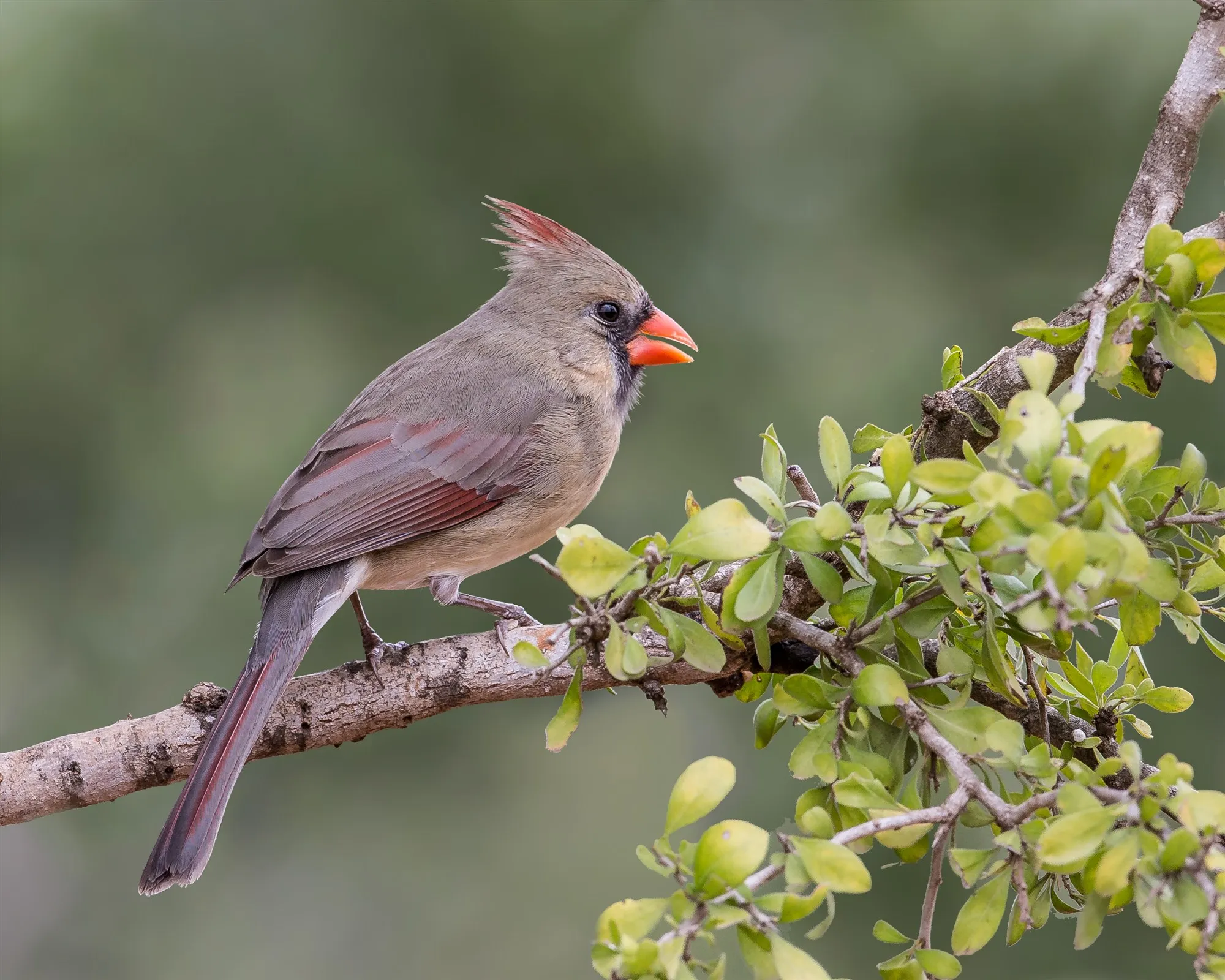
Quick answer: An adult male Northern Cardinal is mostly brilliant red with a black face and red-orange bill. An adult female is pale brown or warm gray-brown with reddish accents in the wings, tail, and crest, plus the same heavy bill shape and pointed crest. Both sexes are crested and long-tailed. Juveniles complicate the comparison because their bills begin dark.
This page is a side-by-side comparison of the sexes. If you saw one brown, crested bird and need to rule out a finch or Pyrrhuloxia, use the more detailed female-cardinal identification guide.
Compare the whole bird
Color is the quickest clue, but it is not the only one. Start with the crest, bill, body shape, and tail. Light, posture, wear, and distance can make a female look grayer or a male look duller than a field-guide photograph.
| Field mark | Adult male | Adult female | Juvenile clue |
|---|---|---|---|
| Overall color | Red, often brightest on the body and crest | Pale brown with warm red accents | Brown and less saturated |
| Face | Strong black mask around the bill | Black face area, often less dramatic | Developing mask |
| Bill | Thick, red-orange | Thick, red-orange | Gray to dark at first |
| Crest | Prominent | Prominent | Shorter or less developed |
| Tail and wings | Red tones visible | Red edging or wash | Brown, less vivid |
| Confidence limit | Backlight and distance can mute red | Shade can make warm brown look gray | A brief view may not support an adult-sex call |
Use the table in order: first confirm the thick bill, crest, and long tail that make the bird a likely cardinal; then compare adult male and female plumage. A dark bill may point to a juvenile, so do not force that bird into either adult column from a brief view.
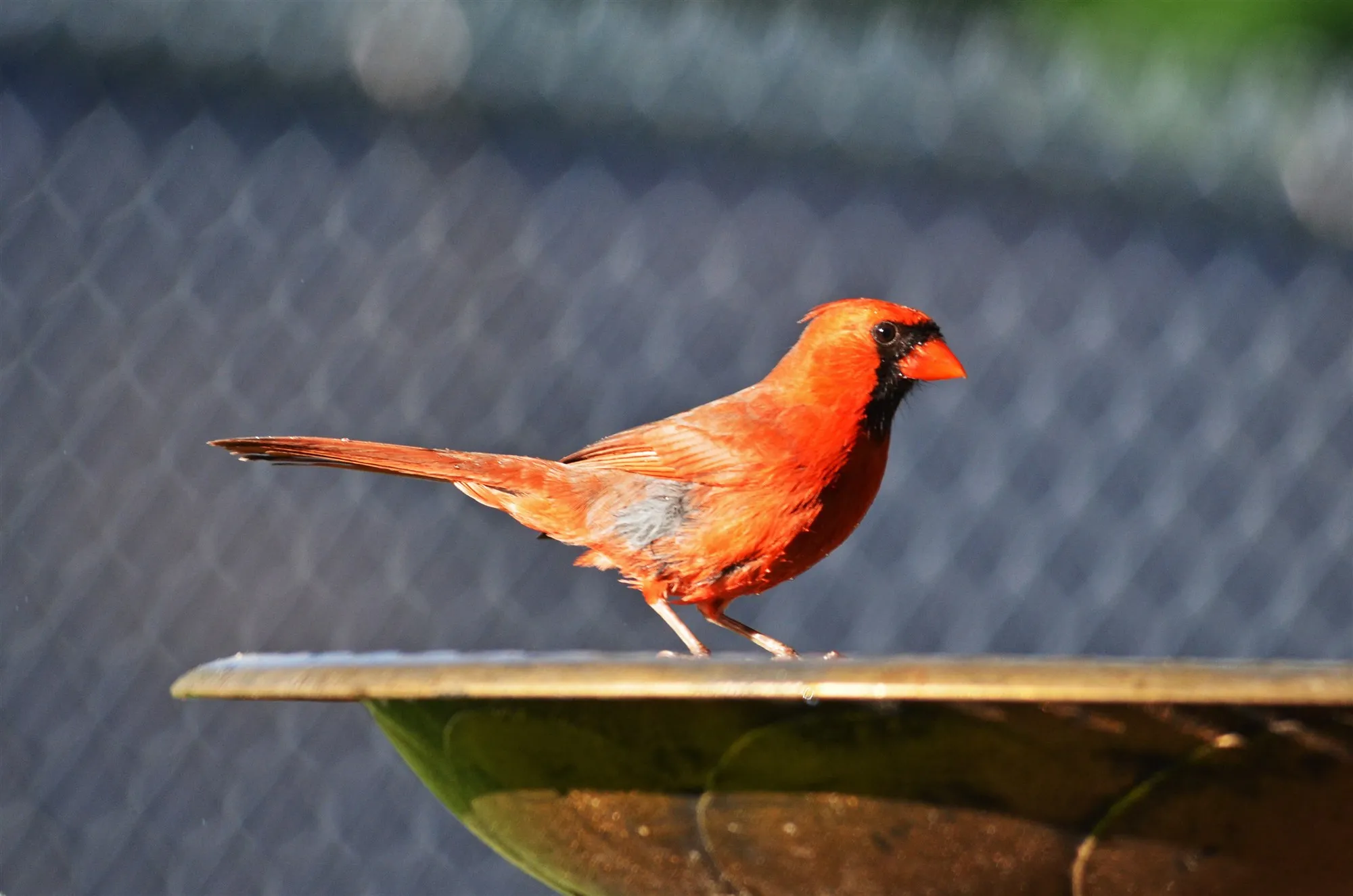
Adult male Northern Cardinal. Photo: Courtney Celley, U.S. Fish and Wildlife Service, public domain, via Wikimedia Commons.
Why the female is not simply “the brown one”
Female cardinals have a recognizable combination of a tall crest, heavy bill, long tail, and reddish accents. The face can be bold or muted. In uncertain light, compare the bill shape and crest before making a call based on brown versus red.
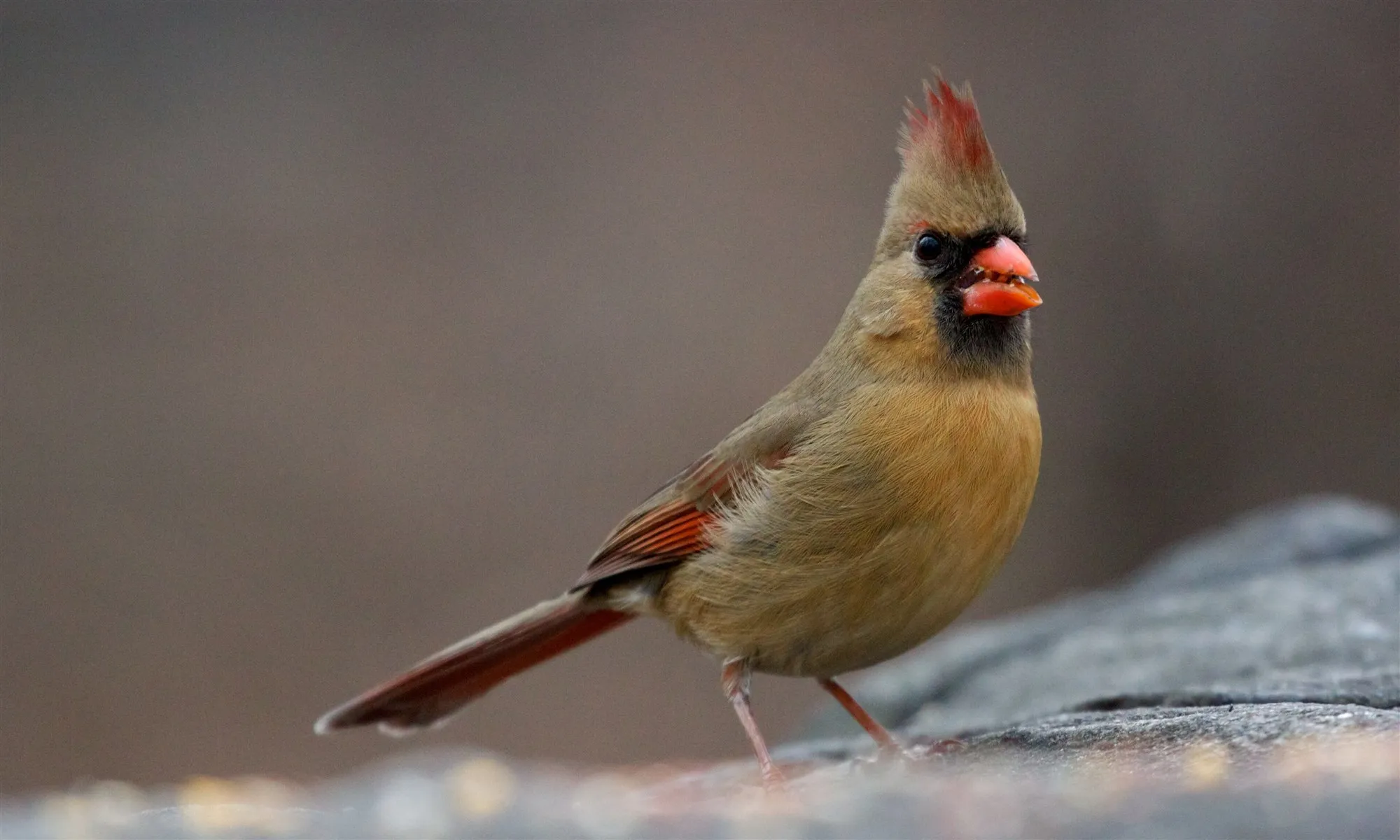
Adult female Northern Cardinal. Photo: Matt MacGillivray, via Wikimedia Commons, CC BY 2.0.
Behavior adds context, not proof
Both sexes can visit feeders, sing, and stay in the same territory. A bird’s behavior can help you notice a pair, but do not use feeding order or a single call as a sex test. Cornell notes that both sexes sing, and females may sing alone or in duets.
Northern Cardinals are a range-dependent identification: seeing a cardinal-like bird does not establish that the species occurs at a particular location. In the desert Southwest, a gray, pointed-crested bird calls for a Pyrrhuloxia comparison; elsewhere, use local range information alongside the visible field marks.
Do not mistake a juvenile for a female
A young cardinal can be brown and crested, but the bill is an important clue. Cornell and Audubon describe a darker juvenile bill that changes as the bird matures. Look for a developing crest, less-defined face, and overall softer plumage. If the view is brief, record the identification as probable rather than certain.
For a deeper female-cardinal guide, see What Does a Female Cardinal Look Like?. If the bird is grayer and you are in the desert Southwest, compare Pyrrhuloxia and check the regional range before deciding.
Sources
- Cornell Lab of Ornithology: Northern Cardinal Identification (opens in a new tab)
- National Audubon Society: Northern Cardinal Field Guide (opens in a new tab)
Photo credits
- Adult male Northern Cardinal at a bird bath: Courtney Celley, U.S. Fish and Wildlife Service, Wikimedia Commons (opens in a new tab), public domain.
- Adult female Northern Cardinal, side view: Matt MacGillivray, Wikimedia Commons (opens in a new tab), CC BY 2.0.