Where to Hang a Hummingbird Feeder
Choose a hummingbird-feeder location with shade, visibility, safe window distance, and easy access for cleaning.
Read guide →Thoughtful feeder placement, nectar care, and habitat ideas for tiny, fast-moving visitors.
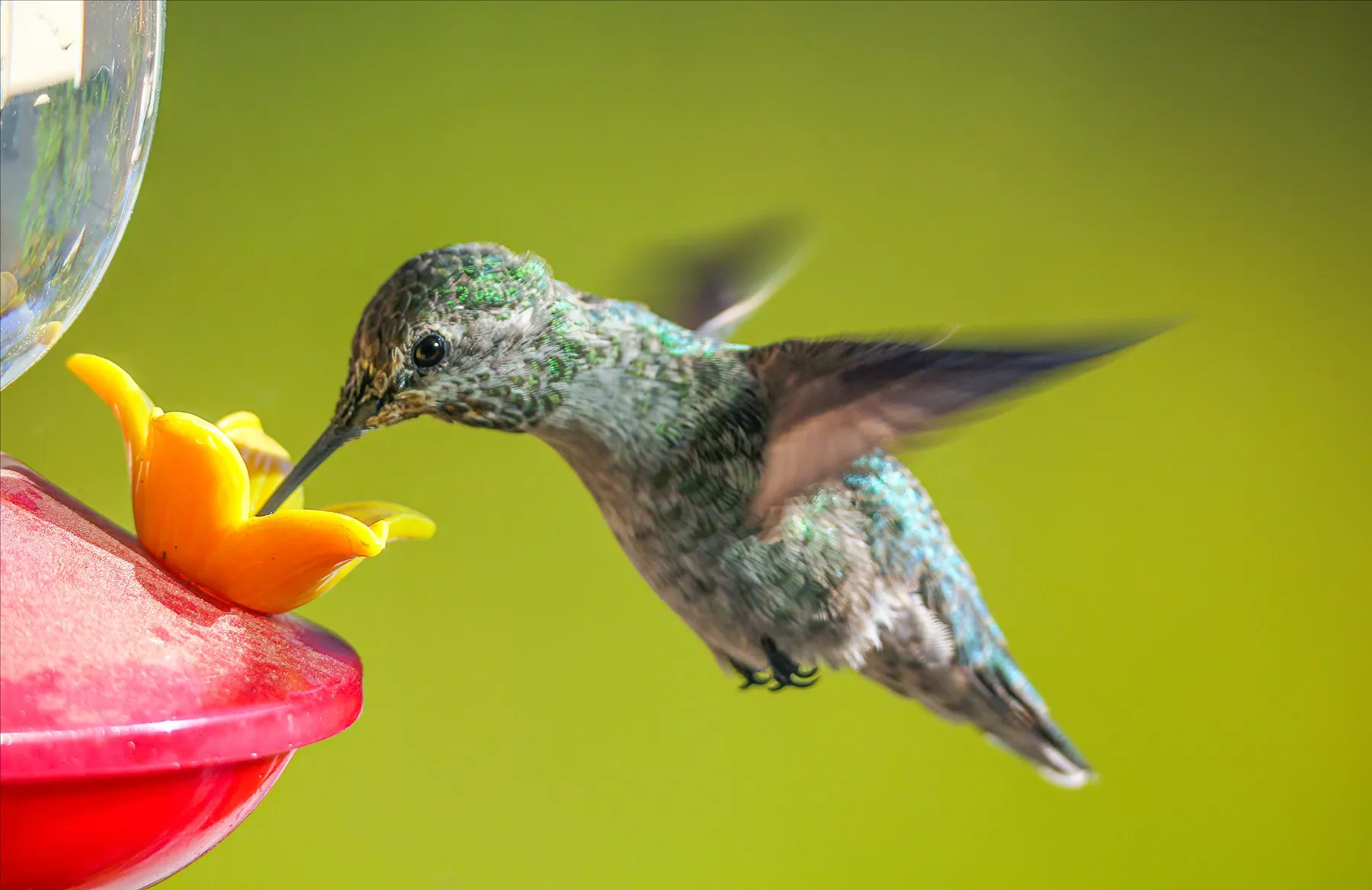
Hummingbird care is built around freshness, cleanliness, safe placement, and flowers that extend beyond a single feeder. Our guides prioritize manageable routines and source-supported recommendations.
Choose a location you can reach without a ladder, with a clear approach for the bird and some relief from strong afternoon heat. A hidden feeder may be hard to inspect; a hot, exposed one can make sugar water spoil sooner. The placement draft below explains windows, shade, nearby vegetation, and cleaning access together.
Cornell Lab (opens in a new tab) recommends changing sugar water at least every three to five days and more often during hot weather. The Smithsonian’s nectar recipe (opens in a new tab) uses one part refined white sugar to four parts water, without red dye. Inspect the liquid and ports often; cloudiness or mold means it is time to empty and clean the feeder immediately.
Flowers and habitat offer more than a sugar-water stop. If you have a small yard, start with a manageable feeder and regionally appropriate plants rather than adding more containers than you can maintain.
Choose a hummingbird-feeder location with shade, visibility, safe window distance, and easy access for cleaning.
Read guide →Learn when to change hummingbird nectar, how to clean the feeder, and why heat and cloudy liquid shorten the schedule.
Read guide →