How to Make a Bird Bath Safe and Useful
Build a safer bird-bath routine with shallow water, traction, clean edges, shade, and regular maintenance.
Read guide →Add water, cover, and native planting choices that make a yard useful beyond feeding time.
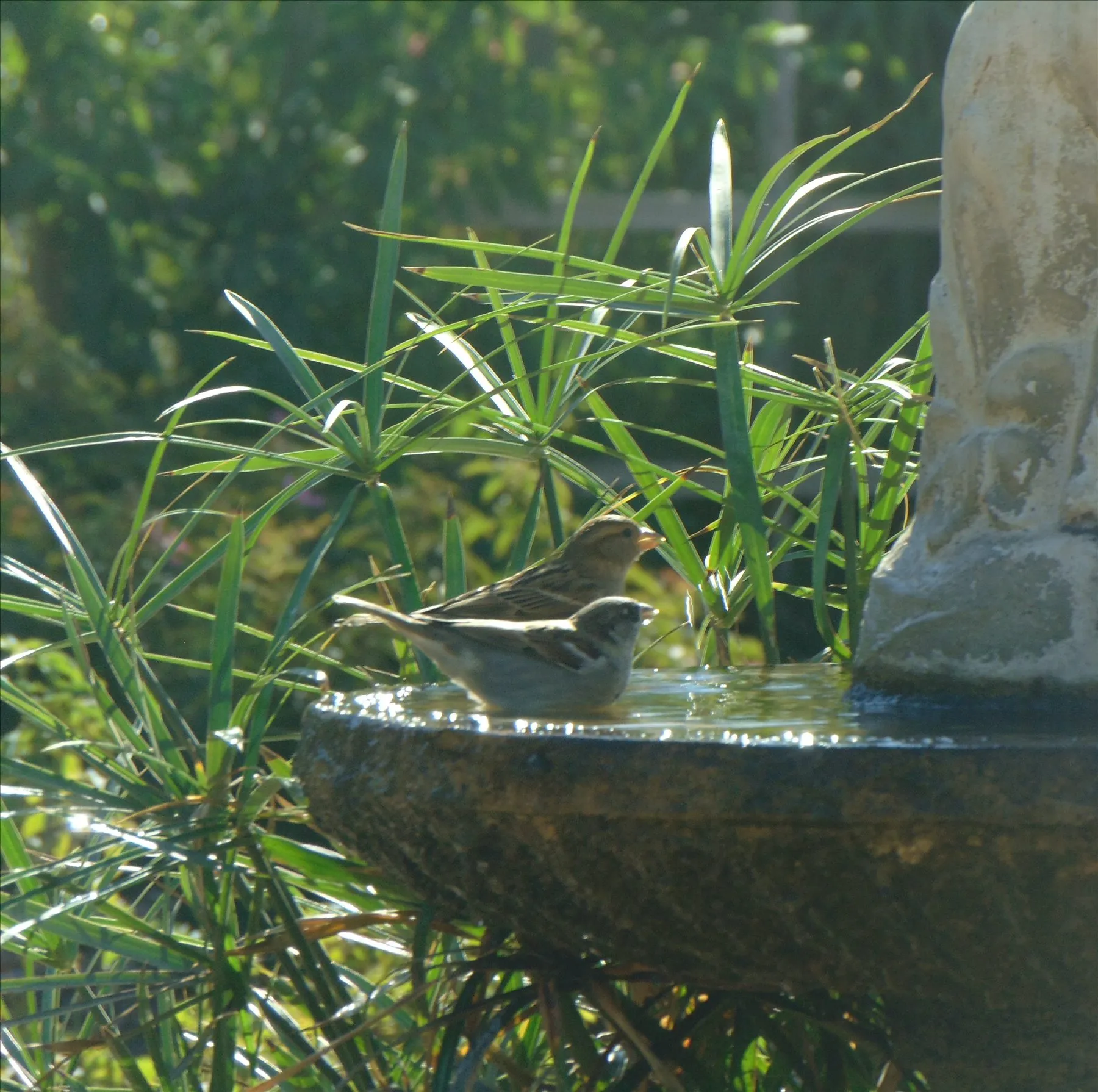
Food is one part of a living backyard. Reliable water, layered vegetation, shelter, and lower-risk maintenance can make the space useful to more species across more of the year.
A shallow, stable basin with an easy exit is more useful than a deep decorative bowl that birds cannot enter comfortably. Place it where birds can see approaching predators and where you can empty and scrub it. The bird-bath guide below covers surface texture, shade, cleaning, and winter precautions without recommending untested equipment.
Nearby shrubs and other regionally appropriate plants can offer cover and natural food. Avoid putting dense hiding cover directly against a bath where a cat could wait. Audubon’s bird-friendly yard guide (opens in a new tab) explains the value of varied habitat beyond feeders.
Start with one water source you can maintain, then observe how the yard is used before adding more. If you also feed seed, keep the bath away from falling hulls and use the Bird Feeders guides for placement and cleaning.
Build a safer bird-bath routine with shallow water, traction, clean edges, shade, and regular maintenance.
Read guide →