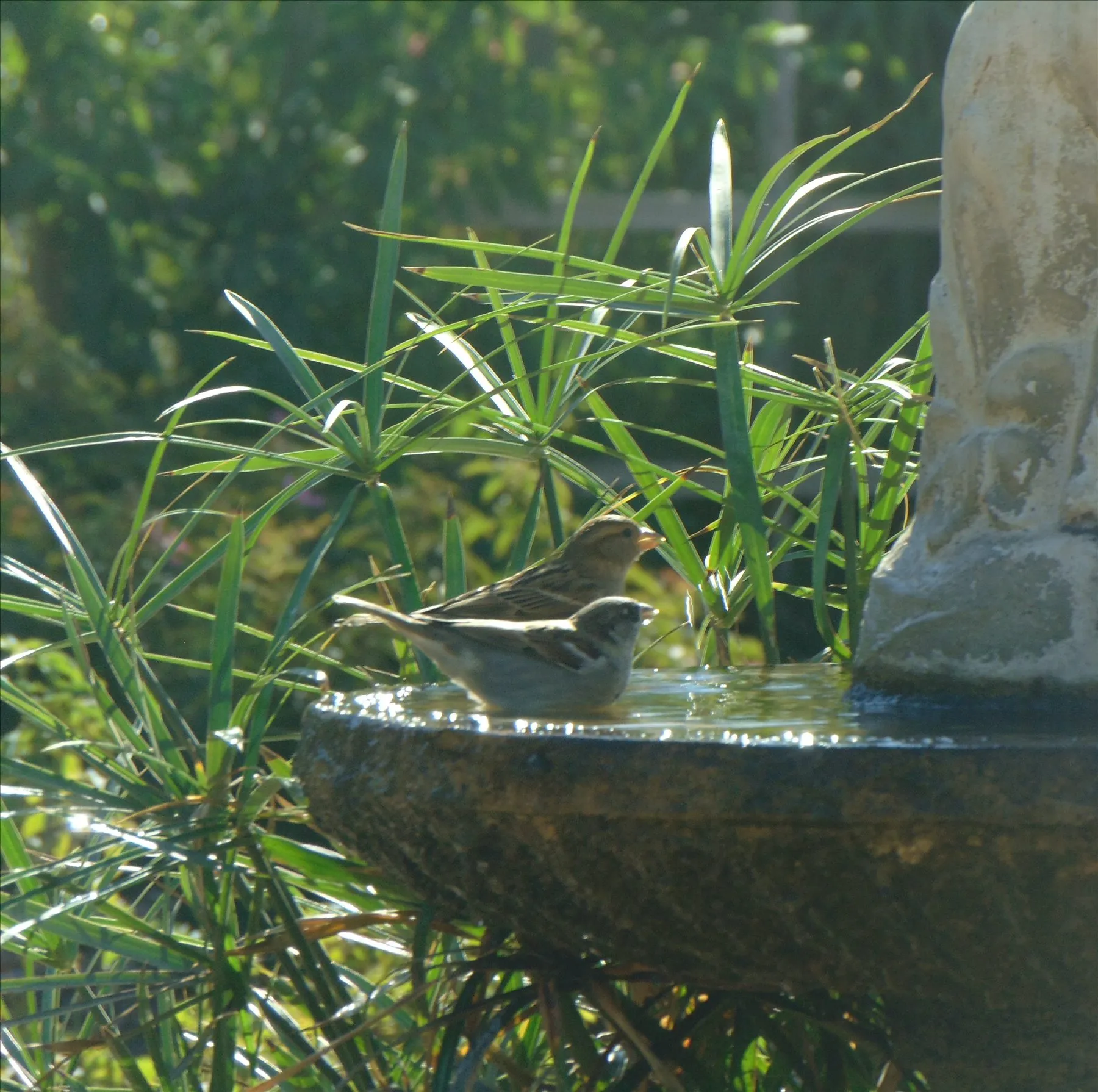
Quick answer: Use a shallow basin with a textured surface, place it where birds can see danger approaching, keep it partly shaded, and replace the water frequently. A bird bath is useful only when it is clean, stable, and easy for you to maintain.
Make the basin shallow and stable
Birds need a place to stand, not a deep pool. Choose a basin with a gently sloping edge and add stones or another secure texture if the surface is slippery. Set it on a stable base so it cannot tip when a squirrel, raccoon, or larger bird lands on the rim.
Avoid deep decorative ponds without a shallow exit. If a bird cannot stand comfortably or reach the edge, the water feature is not suitable as a simple bath.
Cornell’s birdbath guidance (opens in a new tab) describes shallow, gently sloping water with a maximum depth of about two inches in the middle. Use that as a check on a basin you already own before buying a new one; a removable shallow dish may be easier to keep clean than a large ornamental bath.
| Part of the bath | Safer target | What to check |
|---|---|---|
| Edge | No deeper than about 1 inch, with a gentle slope | A small bird can stand and step out easily |
| Center | About 2 inches at most | The basin does not become a deep, steep-sided pool |
| Surface and base | Textured, level, and stable | Birds have footing and the bath cannot tip when used |
Place it where birds can see around it
Give birds a clear view of cats and other predators. Nearby shrubs can provide a retreat, but dense cover directly against the basin may also hide an ambush. Keep the route to the water open enough for birds to scan it before landing.
Partial shade helps water stay cooler and slows evaporation. Avoid placing the bath directly below a feeder, where hulls and droppings can contaminate it.
Clean water is the feature
Empty the basin, scrub away algae and residue, rinse it thoroughly, and refill it with fresh water every day or two, as Cornell recommends. Do not simply add water to the old layer. During hot weather or heavy use, inspect it daily and refresh it sooner if dirty. If birds appear sick or local wildlife-health authorities issue specific guidance, follow that guidance and consider taking the bath down temporarily.
Mosquito control depends on avoiding stagnant water. A shallow bath that is emptied and refreshed regularly is easier to manage than a large feature you rarely clean.
A quick check before you leave it outside
Can you lift and empty it without strain? Is the base level and stable? Can a small bird stand on a textured edge, and can you see the water clearly enough to notice dirt? If any answer is no, change the setup before relying on it as a water source. The wider habitat section explains how water, plants, and shelter work together.
Winter and extreme weather
Keeping water ice-free is optional: Cornell notes that birds can usually use snow or dripping icicles. If you choose a heated bath, use equipment designed for outdoor use, follow its instructions, monitor the basin, and plug it into a ground-fault-interrupted circuit as Cornell advises. Never add chemicals or antifreeze to drinking water.
This habitat guide pairs with Where to Place a Bird Feeder and How to Clean a Bird Feeder.
Sources
- Cornell Lab of Ornithology: Attract Birds With Birdbaths (opens in a new tab)
- National Audubon Society: How to Create a Bird-Friendly Yard (opens in a new tab)
Photo credits
The licensed bird-bath photograph in the article header is credited beneath it. It is illustrative, not a tested product recommendation.