How to Clean a Bird Feeder
A practical routine for taking apart, scrubbing, rinsing, drying, and cleaning the ground beneath a seed feeder.
Read guide →Choose, place, fill, and maintain feeders with the birds—and your routine—in mind.
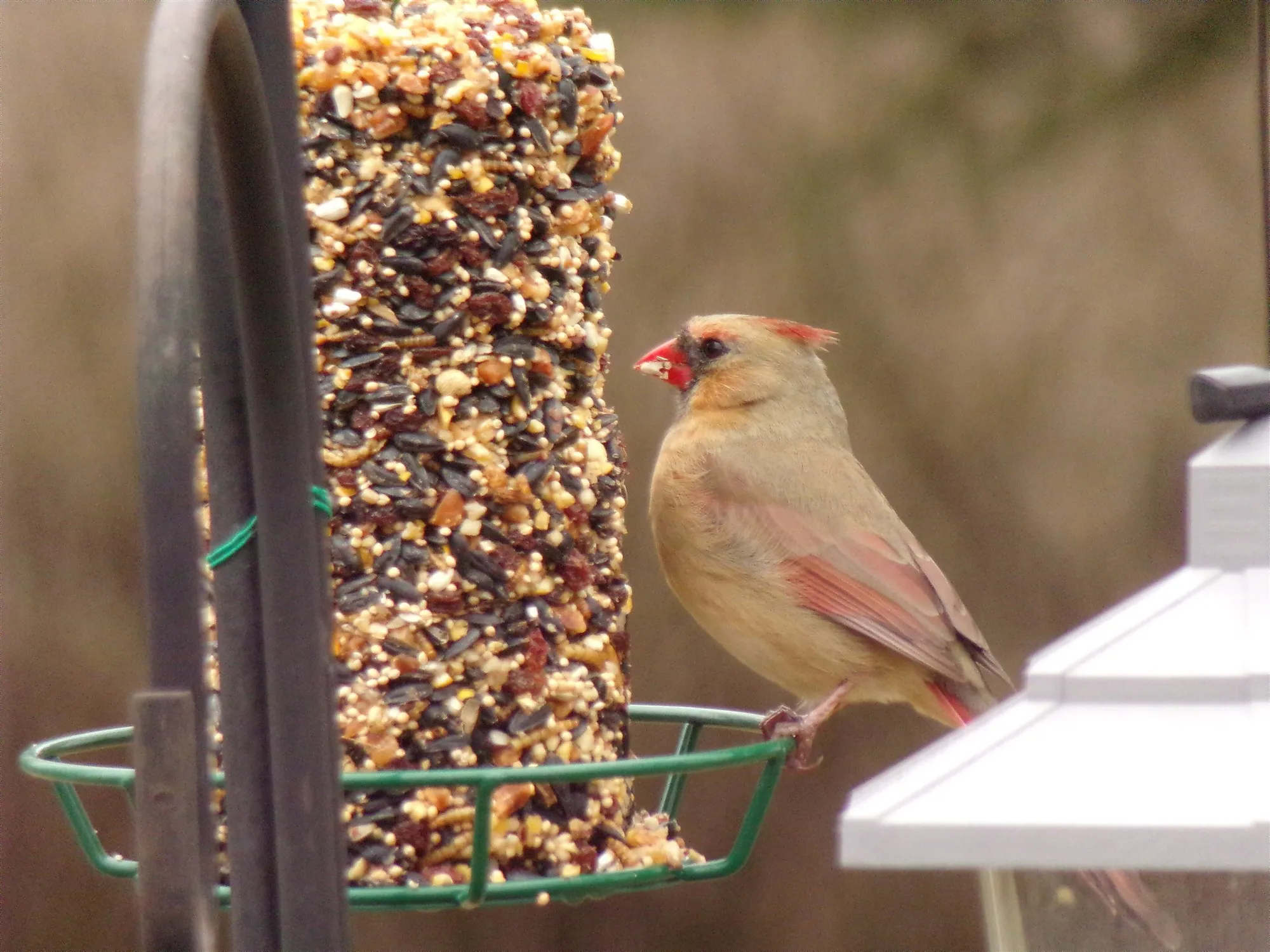
A good feeding station gives birds a clear approach, nearby cover without easy ambush points, food suited to expected visitors, and a cleaning routine the household can maintain.
This section starts with placement and care, then adds feeder styles and seed choices where they solve a real problem.
Look at the windows, nearby shrubs, and places a cat or squirrel could approach before choosing a feeder. The placement guide walks through a small yard, patio, or balcony. A feeder that is easy to reach from the ground is also more likely to be emptied and cleaned when the seed gets wet.
A tray or roomy hopper gives a larger bird, such as a Northern Cardinal, more landing space than a tiny perch. Different birds and seasons call for different food; a large bag of mixed seed is not automatically the best starting point. Try a small amount, watch which species actually use it, and remove food that becomes damp or spoiled. Our winter-feeding and cardinal-feeder drafts explain those decisions separately.
Seed feeders collect hulls and droppings, including on the ground below. Cornell Lab’s cleaning guidance (opens in a new tab) recommends regular washing and more frequent attention in wet weather or when sick birds appear. If a feeder goes quiet, check freshness, placement, weather, and predator activity before buying another one. The guides below cover each step in that order.
A practical routine for taking apart, scrubbing, rinsing, drying, and cleaning the ground beneath a seed feeder.
Read guide →Balance window safety, nearby cover, predator awareness, drainage, cleanup, and maintenance when choosing a feeder location.
Read guide →Build a sensible winter feeding routine around fresh seed, clean equipment, water, habitat, and the birds already using your region.
Read guide →