How to Keep Squirrels Off Bird Feeders
Reduce squirrel access with feeder placement, baffle geometry, cleanup, and humane expectations instead of risky home remedies.
Read guide →Reduce raids, waste, and unwanted visitors without turning the backyard into a fortress.
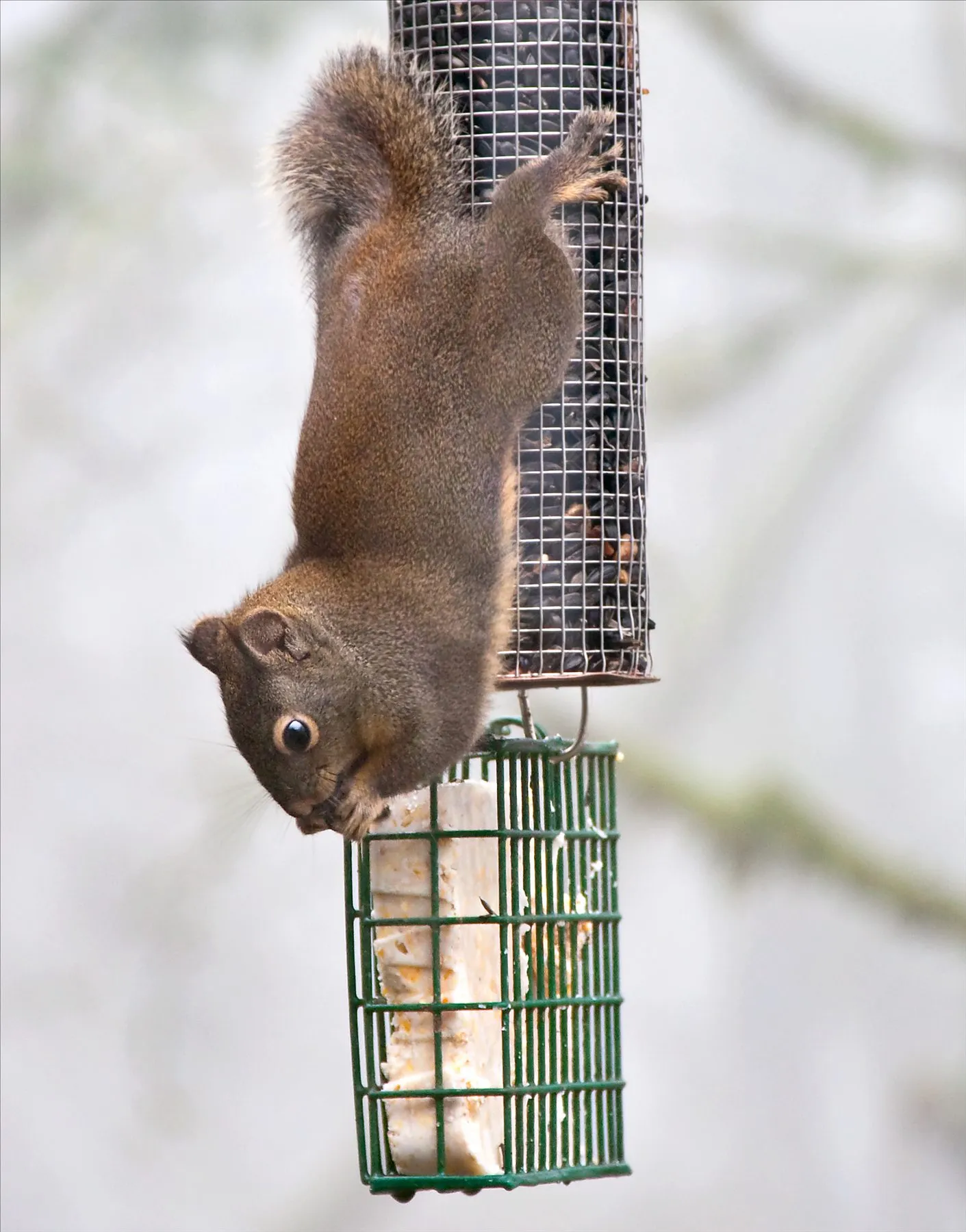
Placement and access usually matter more than gimmicks. This section covers poles, baffles, spacing, cleanup, and feeder design with realistic limitations and humane priorities.
Stand by the feeder and look toward roofs, fences, branches, railings, and the pole itself. A baffle is useful only if it interrupts the route the animal actually uses. Audubon’s feeder guidance (opens in a new tab) explains why distance from launch points and baffle position matter together.
A smooth pole baffle, a hanging baffle, and a weight-activated feeder solve different access problems. None makes a feeder universally squirrel-proof. Measure the available space, check the manufacturer’s installation instructions for the hardware you have, and watch whether a new route appears. Our guide below starts with those observations before discussing equipment.
Sweep up spilled seed so the ground does not become the easier meal. Avoid poisons, sticky coatings, sharp barriers, and improvised traps. If the main problem is that birds no longer visit, use Bird Feeding Problems to rule out food and maintenance issues first.
Reduce squirrel access with feeder placement, baffle geometry, cleanup, and humane expectations instead of risky home remedies.
Read guide →