Quick answer: A quiet feeder usually does not mean you did something wrong. Birds move with the seasons, the weather, the food available nearby, and the arrival of a predator, and none of that is under your control. The one cause you can fix is the feeder itself. So check the seed and the feeder first, then watch for a hawk or cat, then look at what has changed around your yard.
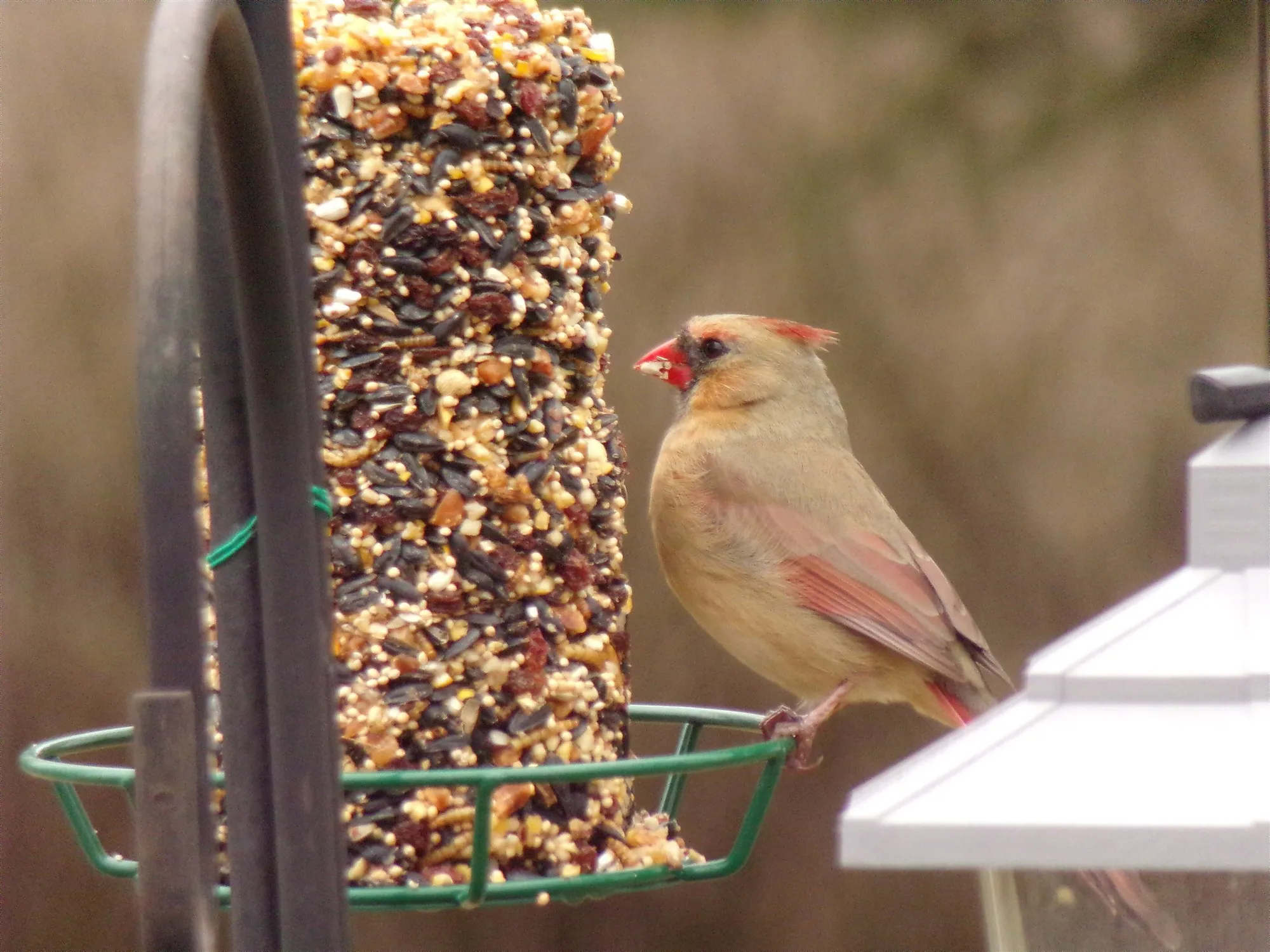
A female Northern Cardinal at a seed feeder. Photo: Cmarsch, via Wikimedia Commons (CC0).
A feeder that was busy last week and empty this week is unsettling, and the first instinct is to blame yourself. The evidence points elsewhere. Project FeederWatch, the citizen-science project run by the Cornell Lab of Ornithology and Birds Canada, lists changes in the surrounding habitat, natural food supplies, weather, and predators as reasons feeder activity can drop. It also says bird numbers normally rise and fall between seasons and between years, and that it cannot know the cause of a specific change in any one yard.
That last point shapes the approach below. You cannot know the cause from your armchair, but you can check the possibilities in a sensible order, starting with the one you control.
Six reasons a feeder goes quiet
1. The season has turned
Bird populations rise and fall from season to season and year to year, according to FeederWatch. A feeder that was crowded in one part of the year can look empty in another without anything being wrong at your end.
2. Natural food is plentiful somewhere else
Pine cones, berries, seeds, and insects vary from year to year, FeederWatch explains, and birds may move toward areas with a surplus and away from areas with a shortage. If wild food is abundant near you, your feeder is simply one option among many.
3. The weather has changed
FeederWatch notes that weather changes often cause birds to shift their ranges, especially in winter. A change in conditions can change who is in your area at all.
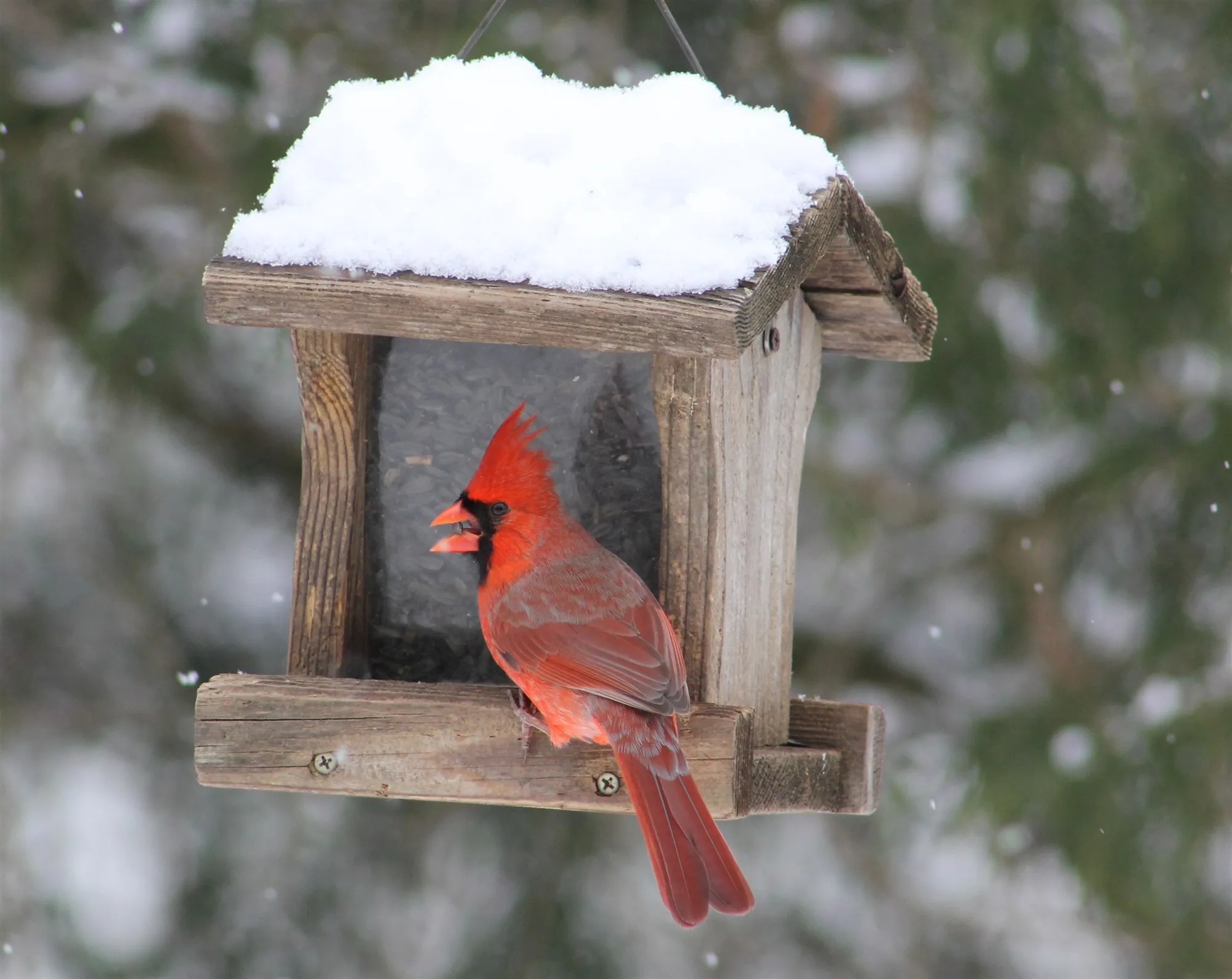
A male Northern Cardinal at a wooden feeder in snowfall. Photo: PookieFugglestein, via Wikimedia Commons (CC0).
4. The habitat around you has changed
Trees being removed or new houses going up can mean more or fewer birds, and FeederWatch calls these local changes a frequent cause of shifts in bird numbers. The change does not have to be in your own yard. Think about what has been cut, built, or planted in your neighborhood.
5. A predator has moved in
A new cat, or a hawk that eats birds, can scare feeder birds away, and FeederWatch says they should return once the predator leaves. Cornell’s All About Birds adds that birdseed draws small birds, and small birds can in turn draw hawks such as the Cooper’s Hawk.
6. The feeder itself needs attention
This one may or may not explain the quiet, but it is the one you control, and it matters for the birds’ health. Cornell says moldy or decomposing seed and hulls that build up on feeder trays can make birds sick, and that droppings and other contaminants may spread infectious disease.
The first 10 minutes: what to check
Do these checks before moving the feeder, changing seed brands, or buying equipment. They separate an unsafe feeding station from a normal change in bird activity.
- Inspect the seed. Look and smell for moisture, clumps, mold, webbing, or an off odor.
- Test the feeder. Check that ports, perches, drainage, and the seed flow are not blocked or damaged.
- Look beyond the feeder. Notice whether birds are still using nearby shrubs, trees, or the ground.
- Watch for disturbance. A hawk, free-roaming cat, construction noise, or a new active doorway can change when birds approach.
- Name one recent change. Weather, natural food, trimmed vegetation, a new building, or a moved feeder can each be a clue—not a conclusion.
Symptom-to-action guide
| What you can observe | Possible explanations | What to check next | Safe next action | When the cause is still unknown |
|---|---|---|---|---|
| Seed is damp, clumped, moldy, or musty | Rain, poor drainage, old food, or a leaking feeder | Tray, ports, seams, and the storage container | Discard questionable seed; clean, rinse, dry, and refill | Do not assume the seed alone explains a long-term decline |
| Birds are in shrubs but avoid the feeder | A blocked port, unfamiliar seed, disturbance, or a predator nearby | Seed flow, approach route, and the area beneath the feeder | Correct an obvious feeder problem; then observe without changing several variables | Birds may be choosing natural food even if the feeder works |
| Birds scatter suddenly or stay high in cover | A hawk, cat, or another disturbance may be present | Watch from indoors for a short, quiet period | Reduce avoidable hazards; use Cornell’s temporary feeder-removal advice only when a hawk is actively hunting the station | A single alarm call does not identify the predator or prove it caused a broader decline |
| Few birds appear anywhere in the yard | Weather, natural food, migration, or habitat change | Nearby berry, seed, and insect sources; changes to trees, shrubs, or construction | Keep the station safe and record observations over several visits | FeederWatch notes that a specific cause cannot always be known for one yard |
| Sick or dead birds appear, especially more than one | Disease, injury, or another event that needs local assessment | Current state wildlife guidance and whether there is unusual mortality | Keep people and pets away; do not handle birds; contact the appropriate state or federal wildlife authority | Do not diagnose disease from appearance or apply a universal shutdown rule |
Temporary change or persistent problem?
A recent quiet spell can follow weather, migration, a burst of natural food, or a passing predator. A feeder that has been quiet across repeated observations deserves a slower check of the feeder, the yard, and recent habitat changes. Neither pattern proves a cause by itself. Keep the setup safe, record what you see at more than one time of day, and change one clear problem at a time instead of imposing a universal deadline for birds to return.
Diagnose it step by step
Work from the top. Each step takes minutes.
- Look at the seed. Pour some out and check for clumps, mold, or a musty smell. Throw out anything questionable instead of topping it off with fresh seed.
- Check that birds can reach it. Make sure the openings are clear and seed flows when the feeder is tilted. A clogged port or a jammed hopper is an easy fix.
- Note when you last cleaned. Cornell recommends cleaning seed feeders about once every two weeks, and more often with heavy use, wet weather, reports of salmonella nearby, or sick birds. If you are past that point, clean it now using the steps below.
- Watch for ten minutes. Sit at a window at a time of day when birds used to be busy. Look for a hawk, a cat, or small birds scattering all at once. Count what you see in nearby trees and shrubs, not only at the feeder. If you are unsure which species you are seeing, our guide to identifying a female cardinal shows the kind of field marks worth checking.
- List what has changed nearby. Removed trees, construction, a new pet, a new neighbor with a cat.
- Look at the natural food. Are neighborhood trees and shrubs heavy with berries, seeds, or cones? Birds may be eating there.
- Decide. Fix what is broken. Take the feeder down for a few days if a hawk is hunting it. Otherwise, keep watching.
A simple decision path
- Does the food or feeder look unsafe? If yes, discard questionable food, clean and dry the feeder, and clean the ground below it.
- Are birds still present nearby but not feeding? If yes, check access, seed flow, and a recent predator or disturbance before moving the station.
- Are birds scarce across the yard? If yes, note weather, natural food, and habitat changes; keep observing rather than claiming one cause.
- Are sick or dead birds involved? If yes, stop treating this as routine feeder troubleshooting and consult current state or federal wildlife guidance.
- Is no clear safety issue visible? Keep the feeder stable, log observations, and avoid changing seed, location, and equipment all at once.
What to check first, and what not to do
Check first, in this order: the seed and feeder, signs of a predator, and recent changes nearby. Those are the causes you can act on or rule out quickly.
Avoid these:
- Don’t refill on top of old or damp seed. Empty the feeder and start with fresh, dry seed.
- Don’t use stronger bleach than recommended. Cornell and Audubon cite no more than 1 part bleach to 9 parts water. Scrub off debris first, then rinse thoroughly and let everything dry before refilling.
- Don’t handle sick or dead birds. Audubon advises contacting a local wildlife rehabilitator or the National Wildlife Health Center instead.
- Don’t expect a timeline. FeederWatch gives none, and the cause for your yard may never be clear.
- Don’t change everything at once. If you move the feeder, switch seed, and rehang it in one weekend, you will not know which change mattered.
If a hawk is hunting your feeder
Cornell’s advice is to take your feeders down for a few days, until the smaller birds disperse, and put them up again in a week or two. The reasoning is that wild food supplies keep changing, so songbirds, doves, and hawks all look for food elsewhere. Songbirds and doves may come back quickly, while the hawk may have moved on to other hunting grounds.
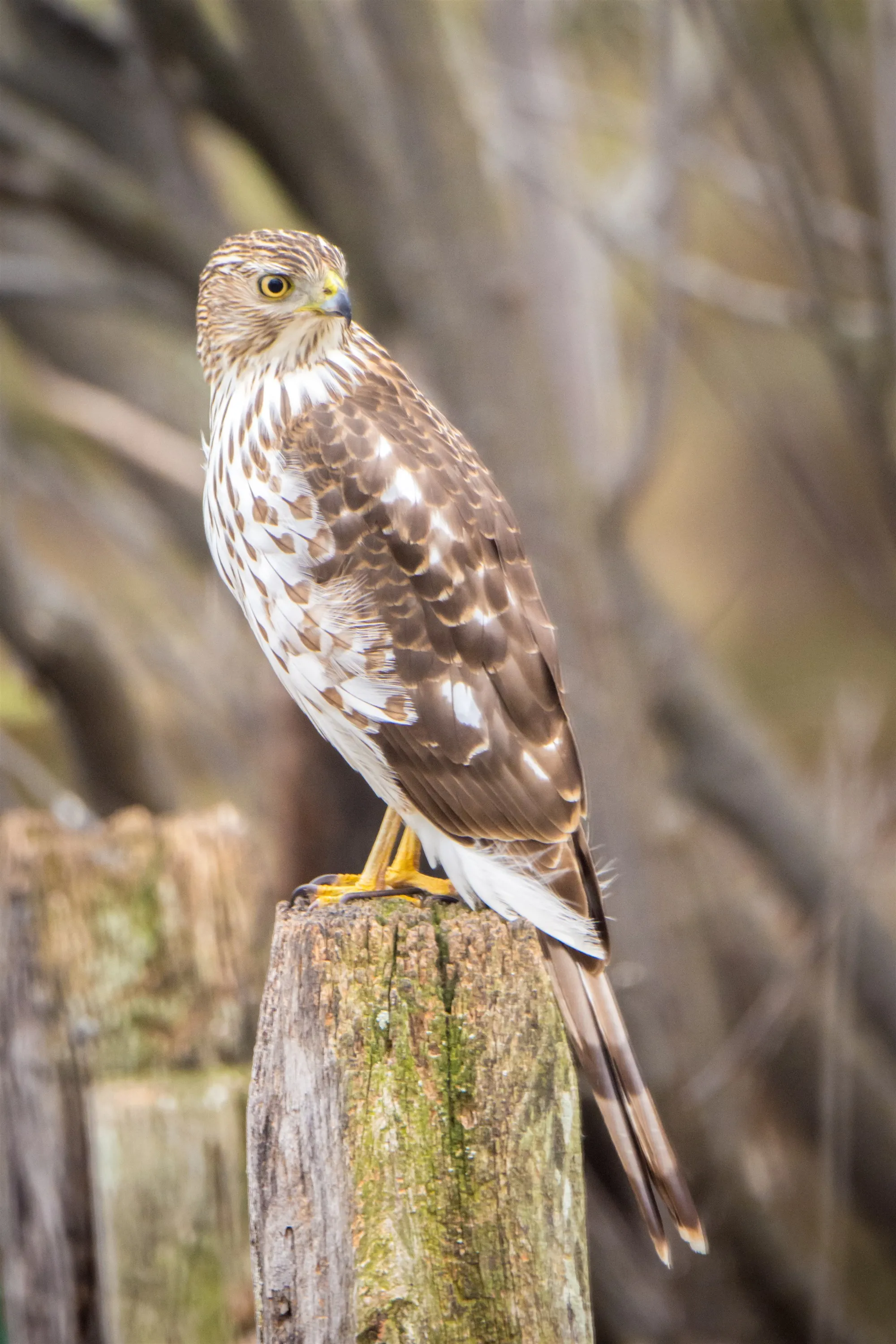
A Cooper’s Hawk in a backyard in Fairfield, Ohio. Photo: Andrew C, via Wikimedia Commons (CC BY 2.0).
If you see sick birds
Do not diagnose the bird or improvise a disease protocol. Keep people and pets away from sick or dead wildlife, and do not handle birds. Cornell lists sick birds as a reason to clean sooner, and Audubon suggests doubling cleaning frequency when disease is suspected. Rake up wet or spoiled hulls and droppings, then check the current guidance from your state wildlife agency. The U.S. Geological Survey says a cluster of sick or dead animals may indicate a wildlife disease of concern and advises contacting the closest state or federal wildlife agency, which can decide whether to investigate. Local instructions can change, so re-check them on the day you act.
How to clean a seed feeder
- Take the feeder apart.
- Scrub off visible debris.
- Wash it. Cornell suggests a dishwasher on a hot setting, or hand washing with soap and boiling water or a dilute bleach solution of no more than 1 part bleach to 9 parts water. Cornell notes that research suggests a 10-minute soak in dilute bleach is very effective in addition to scrubbing.
- Rinse thoroughly and let every piece dry before refilling.
- Clean up hulls, uneaten seed, and droppings beneath the feeder.
Hummingbird feeders follow different rules. Cornell recommends changing sugar water at least every 3 to 5 days, more often in hot weather, and cleaning feeders at least weekly. We cover them in our Hummingbirds topic.
For disassembly, rinsing, drying, and the ground beneath a seed feeder, follow the full bird-feeder cleaning routine rather than using this diagnostic checklist as the only instruction.
Your quiet-feeder checklist
Print it or copy it into a notebook.
Today
- Smell and inspect the seed. Discard anything damp, clumped, or moldy.
- Check that every feeding port is open and seed flows.
- Clean the feeder if it has been more than two weeks, or if the weather has been wet or the feeder busy.
- Clear hulls and droppings from the ground below.
This week
- Watch for ten minutes on two different days, at the time birds used to visit.
- Look for hawks, cats, and sudden scattering.
- Write down what has changed nearby.
- Note whether natural food, such as berries or seeds, is abundant around you.
Keep a short log
| Date | Time | Weather | Birds at the feeder | Birds nearby | Predator or disturbance? | Seed and feeder condition |
|---|---|---|---|---|---|---|
When quiet is normal
If the feeder is clean and the seed is fresh, a quiet stretch can simply be part of the normal rise and fall FeederWatch describes. If you suspect the habitat around you has changed, our Bird Baths & Backyard Habitats topic is where we will cover what a yard offers beyond a feeder. For other common feeder troubles, see Bird Feeding Problems.
Sources
-
Project FeederWatch: There are no birds at my feeders. Where have they gone? (opens in a new tab)
-
Cornell Lab of Ornithology, All About Birds: How to Clean Your Bird Feeder (opens in a new tab)
-
U.S. Geological Survey: What should I do if I find sick or dead wildlife? (opens in a new tab)
Photo credits
- Female Northern Cardinal at a feeder: Cmarsch, Wikimedia Commons (opens in a new tab), CC0 1.0.
- Male Northern Cardinal at a snowy feeder: PookieFugglestein, Wikimedia Commons (opens in a new tab), CC0 1.0.
- Cooper’s Hawk: Andrew C, Flickr (opens in a new tab) via Wikimedia Commons (opens in a new tab), licensed CC BY 2.0 (opens in a new tab). Resized from the original.